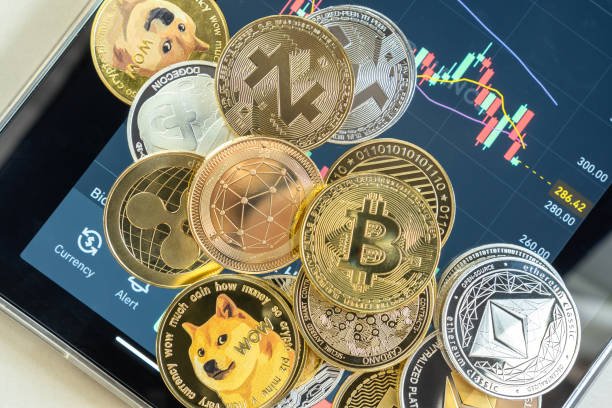
Managing money today often means moving between several different financial services. One app may handle everyday banking, another may provide a payment card, while a separate platform is needed for international transfers or cryptocurrency. Keeping track of balances, transactions, exchange rates, and payment methods across multiple accounts can quickly become inconvenient.
A new generation of fintech platforms is changing this experience by bringing several financial tools together in one digital environment. These services can combine mobile banking, IBAN accounts, payment cards, SEPA transfers, and crypto wallets, allowing users to manage traditional and digital assets from a single multi-wallet platform.
For people who regularly make digital payments, receive money internationally, or hold both fiat currencies and cryptocurrency, this integrated approach can make everyday financial management considerably simpler.
Banking From a Mobile Device
Mobile banking has become an important part of everyday financial management. Instead of visiting a bank branch or relying on desktop banking systems, users can access their accounts directly through a smartphone.
A modern fintech app can provide a digital account where users can check balances, review transactions, transfer funds, and manage payment methods from one interface. Real-time notifications can also help users stay aware of incoming and outgoing payments.
The main advantage is convenience. Whether someone is checking an account balance before making a purchase or transferring money to another account, most routine tasks can be completed within the same application.
This can be particularly useful for people who frequently travel or manage money across different countries because their financial tools remain accessible through their mobile device.
IBAN Accounts for International Money Management
An IBAN account can make receiving and sending international payments more straightforward. Instead of relying exclusively on traditional banking arrangements, users can have access to account details designed for bank transfers.
For individuals and businesses that receive payments from customers, employers, clients, or international partners, having an IBAN can provide a familiar way to handle transfers.
When IBAN functionality is integrated into a broader fintech platform, users do not necessarily need to switch between different services for banking and digital asset management. They can keep their fiat balance and other financial tools within the same account environment.
This unified approach can make it easier to understand where money is going and how much is available across different wallets.
Cards for Everyday Digital Payments
Payment cards remain one of the most practical ways to spend money. A fintech platform that combines banking and card functionality can allow users to connect their available balance to a physical or virtual card.
Virtual cards can be useful for online shopping and subscriptions, while physical cards can be used for everyday purchases where card payments are accepted.
The ability to manage cards from a mobile application adds another layer of convenience. Depending on the provider, users may be able to view transactions, manage card settings, or monitor spending without accessing a separate banking service.
For cryptocurrency users, the concept becomes even more interesting when card functionality is connected to a multi-wallet system. A crypto app with prepaid card functionality can potentially give users a bridge between digital assets and everyday spending, depending on the provider’s supported currencies, conversion features, and applicable terms.
SEPA Transfers Made Simpler
For users dealing with euro payments within the Single Euro Payments Area, SEPA transfers can be an important part of their financial routine.
Integrating SEPA transfer functionality into a fintech app can reduce the need to use separate banking applications. Users can manage eligible transfers alongside their other financial activities, making the overall experience more centralized.
This can be useful for freelancers receiving payments, businesses paying suppliers, travelers managing expenses, or individuals transferring funds between eligible accounts.
The convenience comes from having banking information, transaction history, cards, and wallet balances available through the same digital interface.
A Wallet for Both Fiat and Crypto
One of the most significant developments in modern fintech is the integration of fiat and cryptocurrency management.
Traditional bank accounts are designed primarily for government-issued currencies such as euros, pounds, or dollars. Cryptocurrency wallets, meanwhile, are used to hold digital assets such as Bitcoin and other supported cryptocurrencies.
Historically, managing both types of assets often required separate services. A user might maintain a bank account for fiat money and a cryptocurrency exchange or wallet for digital assets.
A multi-wallet fintech platform can bring these functions together.
Users may be able to view their fiat and crypto balances from one application, subject to the services and assets supported by the provider. This can make it easier to monitor an overall financial position without repeatedly switching between platforms.
The exact features vary between providers, so users should always check which cryptocurrencies, currencies, transfer methods, and card services are actually supported.
Convenient Money Management
The biggest benefit of a multi-wallet service is organization. Instead of managing multiple financial applications, users can potentially access their key money-management tools from one dashboard.
For example, a user might receive a euro payment into an IBAN account, transfer funds through SEPA, spend using a card, and monitor cryptocurrency holdings—all through the same platform.
Having everything together can also make transaction tracking easier. Instead of checking several apps to understand recent financial activity, users can potentially review different balances and transactions in one place.
This does not eliminate the importance of responsible financial management. Users should still monitor fees, exchange rates, transaction limits, security settings, and applicable regulations.
Digital Payments for a Connected World
Digital payments are increasingly becoming part of everyday life. Online shopping, subscriptions, international work, travel, and peer-to-peer transfers all require convenient ways to move and spend money.
A fintech application that combines banking and payment services can help reduce friction between these activities.
For example, a traveler may use a digital account to manage funds, a card for purchases, and a supported currency wallet for holding different assets. A freelancer may receive international payments and use the same platform to manage spending.
The appeal is not necessarily about having more financial products. Instead, it is about bringing useful financial functions into a single experience.
Security and Control Still Matter
Convenience should always be balanced with security. When a single application provides access to banking, cards, transfers, and cryptocurrency, protecting the account becomes especially important.
Users should consider features such as two-factor authentication, biometric login, transaction notifications, device management, and withdrawal or transfer controls.
It is also important to understand that cryptocurrency transactions can involve different risks from traditional banking transactions. Digital assets may be volatile, and transactions may not always be reversible.
Before using a multi-wallet service, users should review its fees, supported assets, geographical availability, regulatory status, and terms of service.
The Future of Multi-Wallet Finance
The financial technology landscape is moving toward greater integration. Instead of treating banking, payments, cards, international transfers, and cryptocurrency as completely separate activities, fintech platforms are increasingly bringing them together.
A well-designed multi-wallet service can give users a more convenient way to manage their financial lives. Mobile banking provides everyday account management, IBAN accounts support eligible transfers, cards provide practical spending options, SEPA transfers facilitate euro payments, and crypto wallets provide access to supported digital assets.
The result is a more unified financial experience.
For users who regularly deal with both fiat and cryptocurrency, having these capabilities in one application can reduce complexity and make digital money management more convenient. As fintech technology continues to develop, multi-wallet platforms are likely to remain an important part of the transition toward more connected, mobile-first financial services.
Also Read: